Costs are up. Raise prices, eat the margin, or bring customers back? The three options for a Canadian restaurant or shop
Costs are up and customers are watching price. A Canadian restaurant or shop has three options, and only one compounds: more visits from the regulars it has.

- Published
- Reading time
- 11 minutes
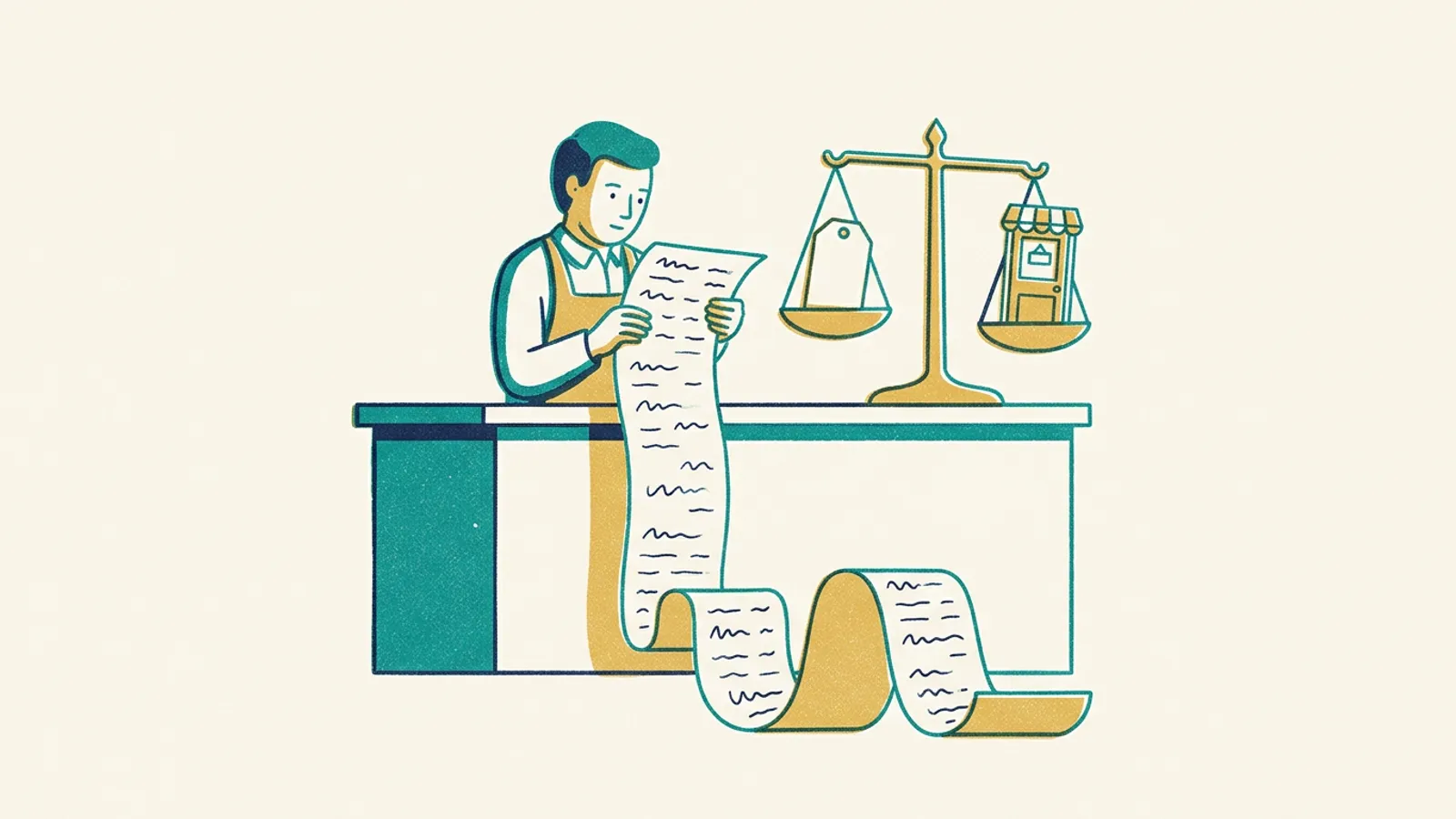
When costs rise, a restaurant or shop has three moves: pass the increase on to customers, eat it, or bring the customers it already has back more often. The first meets a price-first shopper, the second meets a 4.1% margin, and only the third compounds. That is the move instant rewards on trovy are built for: regulars from day one.
The short version
| Pass it on | Eat the margin | Bring them back (on trovy) | |
|---|---|---|---|
| What happens to revenue | Up per ticket, down per week if visits fall | Unchanged | Up with every extra visit |
| What happens to margin | Protected only if nobody notices | Shrinks on every sale, from a 4.1% start | Protected; the reward is a fraction of the extra visit |
| What the customer notices | The new price, and the place down the street | Nothing; the squeeze stays with you | A reward on their phone, with a date on it |
| What it costs to run | New menus or price tags, and a hard conversation | Nothing, until you cannot | Four numbers set once; pay only when a member redeems |
| What next quarter looks like | Fewer visits from the guests who were watching price | The same squeeze, with less room | More visits from the people who already like you |
| Best for | A one-off cost shock, with guests who are not watching price | A short squeeze you can see the end of | Any counter whose regulars could come one more time a month |
When is raising prices still right?
Sometimes the honest move is a higher price. Costs went up for everyone, and guests know it.
- When the increase is small and visible. Fifty cents on a coffee, a dollar on a plate, explained with a line on the menu. Guests forgive what they understand.
- When the item has pricing power. The dish people cross the city for, the piece nobody else stocks. Raise those, hold the rest.
- When your prices have not moved in two years. Catching up is not gouging.
Two rules. Never argue price with a customer who is already stretched; keep it about what they get, not what it costs. And never raise everything at once, because the guest who checks last year's menu photo will remember the one item that jumped, not the ten that did not.
When eating the margin is still right
Absorbing a cost increase is a bridge, not a plan, but bridges have their uses.
- When it is temporary. A supplier's spring price spike, a tariff that is being negotiated, a slow six weeks you have seen before.
- When you are protecting a launch. The new location's first season, the new line's first drop. Price moves later, once the regulars exist.
- When the alternative is losing the guests you spent two years earning.
The problem is the bridge with no far bank. On a 4.1% industry margin, a 5% rise in costs absorbed in full turns a thin year into a loss. And 41% of restaurant companies are already at a loss or breaking even. Eating it buys time. The question is what you do with the time.
What do the costs actually look like in 2026?
These are not impressions. Every number below was opened on its source page on October 1, 2026.
- Owners are telling you. CFIB's September reading of long-term SMB optimism fell nearly ten points to 47.9. In a separate CFIB survey released September 21, 22% of owners described their business as weak or critical. Among those who said now is a bad time to start a business, 88% named the high cost of doing business.
- Tariffs are in the supply chain. Canada's counter-tariffs on $27.6 billion of US goods took effect September 8, 2026, at 15, 25 and 50 percent across hundreds of product lines. The federal Regional Tariff Response Initiative requires at least $1 million in annual revenue, a bar many independent shops and restaurants do not clear.
- Rates are not coming to the rescue. The Bank of Canada held at 2.25% on September 2, its seventh straight hold, with the next decision on October 28.
- Food keeps climbing. Canada's Food Price Report 2026 forecasts food prices up 4% to 6% this year. Headline inflation was 3.0% in August, and food from stores 2.8%.
- Wages stepped up today. Ontario's minimum wage rose to $17.95 an hour on October 1, 2026, from $17.60.
- Restaurants have already pulled the first lever. In EconoLease's 2026 Hospitality Operator Report, 80% of Canadian operators said they raised menu prices in the past 12 months and 49% plan to again. The steepest cost increases came from food and beverage (64%), labour (55%) and rent (32%). Retail rents rose in more tracked markets than they fell in the first half of 2026, with Toronto and Winnipeg logging the most increases (CBRE).
- And the customer is pulling the other way. Restaurants Canada's September 24 release puts the industry's pre-tax margin at 4.1%, with 41% of restaurant companies at a loss or breaking even, up from 12% in 2019. It also finds 80% of Canadians cutting back on restaurant visits, up from 75% a year earlier. Retail Council of Canada's 2026 shopper research says price is the starting point for Canadian shoppers. Salesforce's holiday outlook has 56% of Canadian consumers concentrating spending on essentials, 51% pulling back on splurges and 35% trading down. NielsenIQ finds 40% would buy whatever brand is on sale.
- Owners are already acting on it. In Merchant Growth's 2026 report, a survey of Canadian owners by a financing company published in October, 65% said US-Canada trade tensions had affected their business and 52% of those were performing worse than a year earlier. 22% had used personal credit to fund the business, 22% planned to raise prices within six months, and 14% planned to wind down. CFIB's September barometer found price plans averaging 3.3%, up from 2.6% in August.
Put the two halves together. Costs are up on every line, the customer is watching price, and the first option, passing it on, has already been used once this year by most restaurants. That is why the second visit matters more than the next price change.
The math of one more visit
Take a counter with a $40 average ticket, and say costs rise 5%.
Pass it on. The ticket goes to $42. If every guest keeps coming, you are whole. But eight in ten Canadians say they are cutting back on restaurant visits, and price is the top driver of where shoppers spend. Lose one visit in twenty to the new price and the extra $2 a ticket is gone. Lose one in ten and you are behind where you started, with a higher price to explain.
Eat it. The ticket stays at $40 and $2 of cost lands on each one. On a 4.1% margin that is $1.64 of profit per $40 ticket before the increase, and a loss after it. The ticket looks the same. The year does not.
Bring them back. The ticket stays at $40. A regular who comes twice a month comes three times. That is 12 extra visits a year, about $480, from someone who already likes you. Each extra visit was won with a $4 reward and about $1 in fees, paid only when they walked in. Fifty regulars doing the same is about $24,000 a year of revenue you did not have. The cost is about $250 a month in rewards and fees, spent only on visits that happened.
A boutique runs the same numbers with bigger baskets and longer gaps. A $150 average basket, and a regular who shops three times a season instead of two. One extra visit at $120, won with a $15 reward and about $3 in fees. Twenty such regulars are about $9,600 a year, for roughly $1,440 in rewards and fees.
None of this needs a new customer. It needs the customer you already have to choose you one more time, and a reason to. That is what the reward is: not a discount on today, a reason for next time.
What instant rewards do instead
Loyalty shouldn't take years. trovy treats every customer like a regular from the first visit: a reward the moment they pay, a branded text, a reason to come back. trovy works through the POS you already run. A customer pays, and a few seconds later a text lands on their phone: "You earned $4 at [your restaurant]. Use it on your next order of $40 or more by October 31." Their phone number becomes a member record on your own list, with consent handled at the join. When they come back and spend the minimum, the reward comes off. Rewards expire, 30 to 60 days out, and the text says so. That date is the extra visit.
Four numbers, set once, tuned to the business:
| Parameter | What it does | Counter, $40 ticket | Boutique, $150 basket |
|---|---|---|---|
| Earn rate | Share of the purchase that becomes a reward | 10% | 10% |
| Cap | The most one visit can earn | $5 | $15 |
| Minimum spend | What the return purchase has to reach | $40 | $100 |
| Expiry | How long the reward lasts | 30 days | 45 days |
What it costs: start for $5, everything included for your first 5 redemption visits or your first month, whichever comes first. Then you pay only on repeat sales: 2.5% of what the customer spends on the visit where they redeem, after the reward comes off, plus five cents for each text you send. It is the one line in the budget that only appears when revenue does.
This is the third option in practice. Not more peak traffic, which you may not be able to serve, but this year's crowd coming back more often and filling the slow windows. People are watching every dollar. A reward takes a little of the sting out of the next visit, so the next time they choose is more often a time they choose you.
Related reading: Is Uber Eats worth it for a Canadian restaurant? | trovy, Markdowns vs instant rewards for clothing retailers | trovy, Retention vs acquisition when confidence is low | trovy.
Sources
- CFIB, Fuel costs, tariff pressures drag small business confidence down in September (Business Barometer, Sept 2026)
- CFIB, One in five small business owners describe their business as weak or critical as Parliament returns (Sept 21 2026)
- Department of Finance Canada, Canada announces targeted countermeasures and substantive support for workers and businesses in response to US tariffs (Aug 2026)
- Department of Finance Canada, List of products from the United States subject to counter-tariffs effective September 8, 2026
- CFIB, Regional Tariff Response Initiative (RTRI)
- Bank of Canada, Opening statement, September 2, 2026
- Bank of Canada, 2026 schedule of policy interest rate announcements
- Dalhousie University, Canada's Food Price Report 2026
- Government of Ontario, Your guide to the Employment Standards Act: minimum wage
- Statistics Canada, Consumer Price Index, August 2026 (Sept 14 2026)
- Restaurants Canada, Eight in 10 Canadians are cutting back on restaurant visits as affordability pressures worsen (Sept 24 2026)
- Retail Insider, The high cost of doing business in the restaurant industry (EconoLease 2026 Hospitality Operator Report, Sept 15 2026)
- Retail Council of Canada via Newswire, New research: how Canadian shoppers are navigating affordability (July 9 2026)
- Retail Insider, Canadian retailers enter holiday 2026 with spending momentum and price-sensitive shoppers (Salesforce, Sept 1 2026)
- NielsenIQ, From caution to control: how Canadian consumers are redefining value in 2026
- Retail Insider, Canadian retail properties perform well in the first half of 2026 (CBRE Retail Rent Survey, Sept 2026)
- Retail Insider, 52% of tariff-impacted small businesses are performing worse: Merchant Growth report (October 2026)
Frequently asked questions
If the increase is small, visible and on items with pricing power, probably yes. Eight in ten Canadians say they are cutting back on restaurant visits, so a blanket increase risks the visits more than it protects the margin.
Restaurants Canada puts the industry's average pre-tax margin at 4.1% as of September 2026, with 41% of restaurant companies at a loss or breaking even, up from 12% in 2019.
Usually, but be wary of the tidy multipliers you see quoted; most have no traceable source. The arithmetic is enough. One extra visit a month from a regular at a $40 ticket is about $480 a year, won for about $5 a visit, with no ad spend.
Start for $5, everything included for your first 5 redemption visits or your first month, whichever comes first. Then 2.5% of the purchase on which a member redeems, after the reward comes off, plus five cents per text. There is no setup fee and no monthly fee.
Yes. The parameters change, since a boutique runs a bigger cap, a higher minimum and a longer expiry. The mechanic is the same: a reward by text at the counter, usable on the next visit.
Then you are the business this works best for. The question is how often, and whether you know the number. A reward with a date on it turns twice a month into three times, and shows you who did it.