Confidence is at a 2026 low. The cheapest customer to win is the one who came in last month: retention vs acquisition
CFIB's barometer fell to 47.9 and 14% of owners plan to wind down. What a new customer costs vs bringing one back on trovy, without the unsourced 5x line.

- Published
- Reading time
- 11 minutes
Business confidence fell nearly ten points in September, to 47.9 on CFIB's barometer. In that market, the cheapest customer to win is the one who came in last month. A new one costs an ad, a 20% to 30% commission or a voucher, every time. A reward on trovy costs a few dollars, only when a known customer comes back.
The mood, in numbers
Four releases in six weeks, each from its own page.
- CFIB Business Barometer, September 2026. Confidence "dropped nearly 10 points in September, falling to 47.9"; below 50, more owners expect a weaker year than a stronger one. Fuel costs are "causing difficulties for 62% of small firms," tax and regulatory costs for 61% and wage costs for 60%. "Price plans spiked in September, averaging 3.3%, up sharply from 2.6% in August."
- Merchant Growth's 2026 report, October 2026. A survey of Canadian owners by a financing company, reported by Retail Insider: nearly two in three owners (65%) say US-Canada trade tensions have affected their business this year. Among them, more than half (52%) say the business is performing worse than at this point last year. 22% have used personal credit to fund the business, 22% plan to raise prices within six months, and 14% plan to wind down.
- Statistics Canada, Canadian Survey on Business Conditions, third quarter 2026. 59.8% of businesses expect cost-related obstacles over the next three months. Inflation is the single most expected obstacle, at 41.6%; recruiting skilled staff is second, at 25.2%.
- Restaurants Canada, September 24, 2026. The industry's pre-tax margin is 4.1%. 41% of restaurant companies are at a loss or breaking even, up from 12% in 2019. 80% of Canadians are eating out less often, up from 75% a year earlier.
Read together: owners expect costs to rise, plan to raise prices, and know their customers are cutting back. That is the worst year to spend money finding strangers, and the best year to keep the people already in the room.
What does a new customer cost you?
Every way of finding a new customer has a price on the platform's own page. All opened October 5, 2026.
| Way to find a new customer | What its own page says | On a $40 first order |
|---|---|---|
| An Instagram or Facebook ad | Meta: start with at least $5 a day for six days (its guidance as of October 2026). One agency's figures from its own campaigns: a 2025 average of $8.19 per thousand impressions and a 1.77% link click-through rate in October 2025 (Gupta Media) | About 46 cents a click before anyone walks in. If one click in ten becomes a visit, about $4.60 per new customer; one in twenty, about $9. Nothing about them stays with you |
| An Uber Eats delivery order | 20%, 25% or 30% of the order on the Lite, Plus and Premium plans in Canada; pickup 10% with validated in-store pricing, otherwise 15% | $8 to $12, on this order and on every order after it |
| A DoorDash delivery order | 20%, 25% or 29% on Basic, Plus and Premier; pickup 8% or 10% | $8 to $11.60, every order |
| A pickup-app order (Ritual) | "Under 10% commission for new restaurants"; none on existing customers | Up to $4 on the first order, and the guest's points are Ritual's |
| A deal-site voucher | The structure: a discounted voucher, a share to the site, one visit. The sites' merchant pages would not open for this check, so no figure is quoted | Half the ticket or more, once |
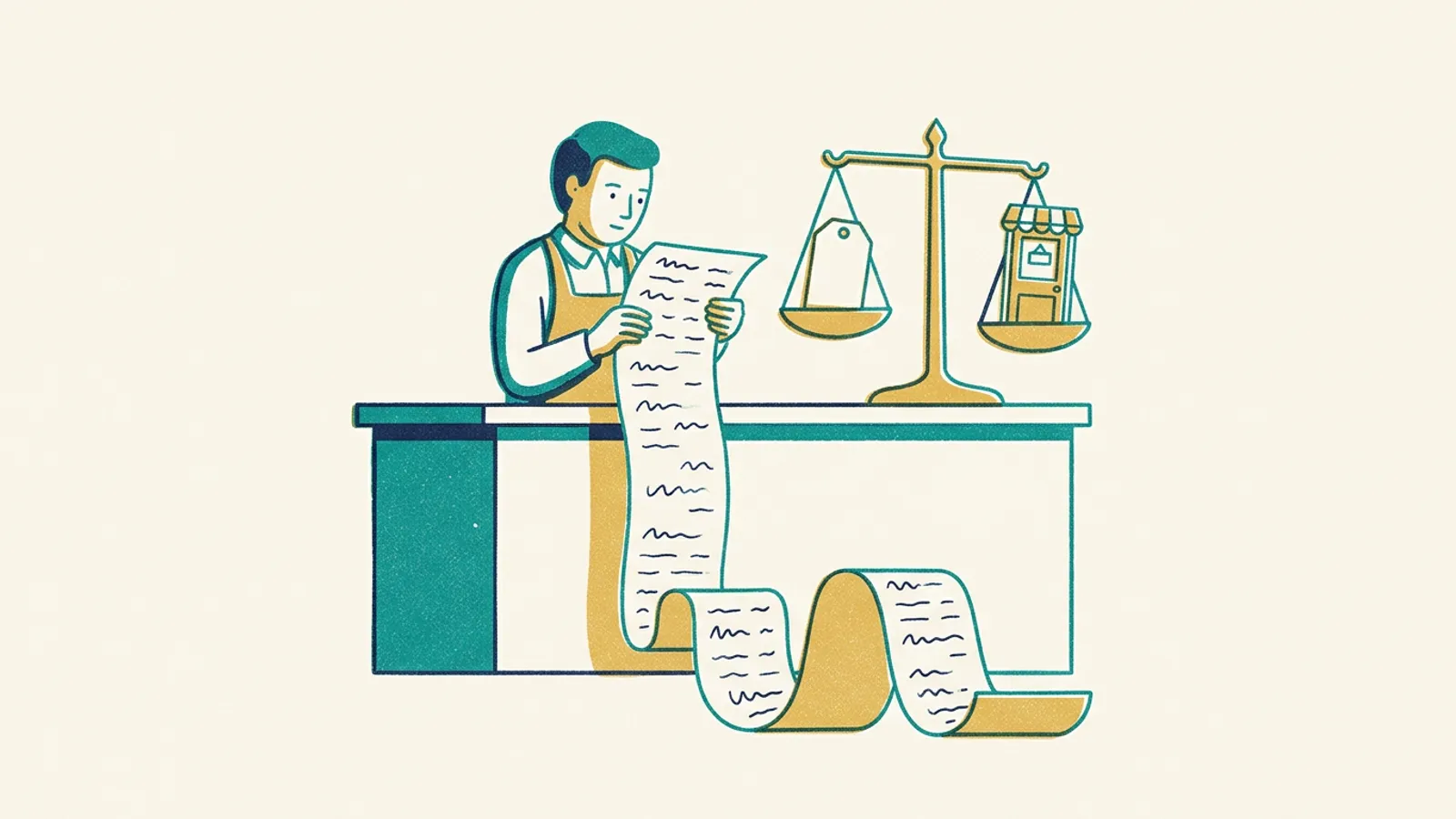
Every line has the same shape. You pay to be introduced, the introduction belongs to the platform, and you pay again next month.
The multiplier nobody can source
You have read that it costs five times more to win a customer than to keep one. The line's most-cited home is a 2014 Harvard Business Review piece: "Depending on which study you believe, and what industry you're in, acquiring a new customer is anywhere from five to 25 times more expensive than retaining an existing one." It names no study. The same piece attributes a second figure, that a 5% rise in retention lifts profits by 25% to 95%, to Frederick Reichheld of Bain & Company. That one has an author, and a range wide enough to mean anything.
This article uses neither. It does the arithmetic for a counter instead.
A $40 first visit through a delivery app costs $8 to $12 in commission, and the next order from the same guest costs the same again. A $40 first visit from an ad costs whatever the clicks cost before one of them walked in. On the agency benchmark that is something like $5 to $9 at one visit per ten or twenty clicks, and more if fewer convert. A $40 return visit on trovy costs the $4 reward the guest already earned plus about $1 in fees on trovy's pricing, and it costs nothing if they do not come.
On those numbers the multiplier for a counter is somewhere between one and three, not five to 25, and the honest point is a different one. The acquisition cost repeats on every order the platform brings. The retention cost is paid once, only when the customer actually returns, and it leaves you a member instead of a report.
Do you know your repeat rate?
Most owners do not, because nothing at the counter records it. The number to know is simple: of the customers who paid this month, what share paid again within 30 days? A POS with a customer directory can answer it for the customers who gave a name. A pickup app answers it for its own users and keeps the rest. On trovy the number exists from the first week, because every member joins by phone number at the counter and every redemption is a return visit you can count.
Square's 2026 Local Economy Report, drawn from its own Canadian sellers, found that regulars generate nearly six times the annual revenue of one-time visitors. That is vendor data, a direction rather than a census. The direction matches what Lucas Spinosa of Black Sheep Coffee Roasters in Ontario's Niagara region told Retail Insider in March, in part: "They're part of our daily rhythm. With our loyalty program, we can recognize them, remember their orders, and make sure they feel valued every time they walk in."
A repeat rate is the one number that turns the mood in the first section into a plan. If 20% of this month's customers come back within 30 days, the question for a low-confidence year is what a reward does to the other 80%. It is not what an ad does to strangers.
The short version
| Spending to find new customers (ads, delivery apps, deal sites) | Bringing known customers back (instant rewards on trovy) | |
|---|---|---|
| Who you pay for | Strangers, most of whom visit once | People who have already paid at your counter |
| When you pay | Before the visit, every time | After the return visit, only when it happens |
| What it costs on a $40 visit | $8 to $12 in delivery commission; an ad's clicks; half a ticket on a voucher | A $4 reward the guest earned, plus about $1 in fees |
| What you keep | A report | A member on your own list, by phone number, with consent |
| What it does in a year like this one | Spends the margin you do not have | Protects it: no return, no cost |
| Best for | Launch week and a dead night | Every month after that |
When acquisition still comes first
- Launch week. Nobody can bring back a customer they have not met. The first visit has to be bought or earned somewhere.
- A dead night. A time-boxed deal or a boosted post fills seats the regulars were never going to fill on a Tuesday.
- A second location. The list from the first door does not walk across town.
- Products that need discovering. A gift shop in December needs the feed, and the ad is the feed with a budget.
The rule from the numbers: acquisition is a cost you choose, once per customer. Retention is the only spend that pays only when it works.
What instant rewards do instead
Loyalty shouldn't take years. trovy treats every customer like a regular from the first visit: a reward the moment they pay, a branded text, a reason to come back. trovy works through the POS you already run. A customer pays, and seconds later a text lands: "You earned $4 at [your restaurant]. Use it on your next visit of $40 or more by November 4." Their phone number becomes a member record on your own list, with consent handled at the join. When they come back and spend the minimum, the reward comes off. If they do not, it expires, and you paid nothing.
Four numbers, set once:
| Parameter | What it does | Counter, $40 ticket | Boutique, $120 basket |
|---|---|---|---|
| Earn rate | Share of the purchase that becomes a reward | 10% | 10% |
| Cap | The most one visit can earn | $5 | $15 |
| Minimum spend | What the return purchase has to reach | $40 | $100 |
| Expiry | How long the reward lasts | 30 days | 45 days |
What it costs: start for $5, everything included for your first 5 redemption visits or your first month, whichever comes first. Then you pay only on repeat sales: 2.5% of what the member spends on the visit where they redeem, after the reward comes off, plus five cents for each text you send.
Run the $40 guest both ways. Found through a delivery app on its 25% plan: $10 to the app on the first order and $10 on every order after it. The guest earns the app's points, and you learn a first name. Brought back on trovy: the guest earned $4 at the counter and came back for $40. $4 came off, you collected $36, and you paid about $1 on trovy's pricing (90 cents plus two texts at five cents each). The second visit cost $5 instead of $10, happened at full margin at your own counter, and left a member on your list. In a year when 14% of owners plan to close and 80% of guests are cutting back, that is the whole case. The cheapest customer to win is also the quickest to make a regular: they already came once. A reward on day one does the rest.
Related reading: Rising costs: 3 options for restaurants and shops | trovy, Discount vs reward for restaurants: the second visit | trovy, Instagram ads vs your own members: rented vs owned | trovy, Is Uber Eats worth it for a Canadian restaurant? | trovy.
Sources
- CFIB, Fuel costs, tariff pressures drag small business confidence down in September (Business Barometer, September 2026)
- Retail Insider, 52% of tariff-impacted small businesses are performing worse: Merchant Growth report (October 2026)
- Statistics Canada, The Daily: Canadian Survey on Business Conditions, third quarter 2026 (August 31, 2026)
- Restaurants Canada, Eight in 10 Canadians are cutting back on restaurant visits as affordability pressures worsen (September 24, 2026)
- Meta for Business, Ads pricing
- Gupta Media, Social media ads cost (2025 benchmarks)
- Uber Eats, Merchant pricing, Canada
- DoorDash, Merchant pricing, Canada
- Ritual, Pricing
- Harvard Business Review, The Value of Keeping the Right Customers (Amy Gallo, October 29, 2014)
- Retail Insider, Square report finds group of loyal regulars generates 6x more revenue for Canada's small businesses (March 18, 2026)
Frequently asked questions
47.9, down nearly ten points on the month. Below 50, more owners expect a weaker year than a stronger one. Fuel costs trouble 62% of firms, tax and regulatory costs 61% and wages 60%, and price plans average 3.3%.
Nobody can show you the study. The most-cited source, a 2014 Harvard Business Review piece, says "depending on which study you believe" and names none. Do your own arithmetic: the commissions are on the platforms' pages, and a reward on trovy costs a few dollars only when the customer returns.
Take the customers who paid this month and count the share who paid again within 30 days. A POS directory can do it for customers who gave a name. On trovy every member and every redemption is counted from day one.
20% to 30% of each delivery order on Uber Eats Canada's and DoorDash Canada's plans, on every order, with pickup at 8% to 15%. The guest's loyalty points stay with the app.
Start for $5, everything included for your first 5 redemption visits or your first month, whichever comes first. Then 2.5% of the purchase on which a member redeems, after the reward comes off, plus five cents per text. There is no setup fee and no monthly fee.
No. Cut the spend that repeats for the same customer. Keep a first-visit budget for people who do not know you, and move the second visit to a reward that costs nothing unless it works.