Is Uber Eats worth it for a Canadian restaurant? What delivery apps really cost, and what to run instead
Uber Eats and DoorDash take 20% to 30% of every delivery order in Canada and keep the customer. What it costs a Canadian restaurant, and the alternative.

- Published
- Reading time
- 9 minutes
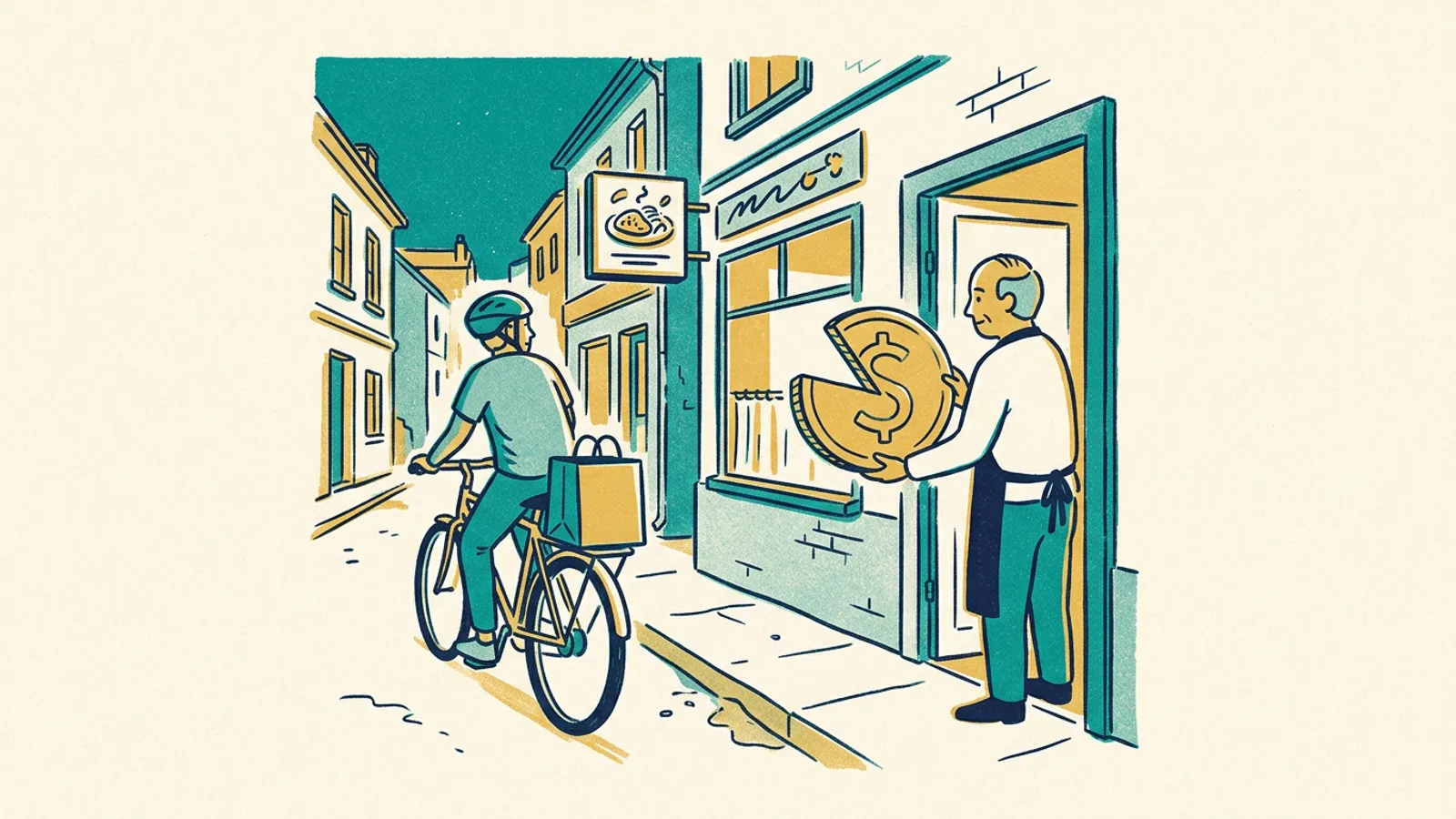
For most Canadian restaurants, no. Uber Eats and DoorDash charge 20% to 30% of every delivery order, in an industry that keeps 4.1% before tax, and the guest's loyalty stays with the app. Use an app for reach. Then make the regulars yours: an instant reward on trovy, by text when they pay at your counter.
The short version
| Delivery app (Uber Eats, DoorDash) | Instant rewards on trovy | |
|---|---|---|
| Who owns the guest | The platform. You get a name and phone number for the hand-off, and nothing to market with | You. The guest joins your own list by phone number at the counter |
| What it costs | 20% to 30% of every delivery order, on every order, for as long as you are listed | $5 to start, covering your first 5 redemption visits or your first month, whichever comes first; then 2.5% of the return visit and five cents a text |
| When you pay | On the first order and every order after it | Only on the return visit |
| What the guest gets | Convenience, and progress in the app's own membership | A dollar reward by text, seconds after paying, usable on their next visit |
| What you can do with the list | Nothing beyond the order in front of you | Text them a reason to come back, under Canada's anti-spam rules |
| Effort to run | Tablet, packaging, menu upkeep, disputes | Set four numbers once; it runs through your POS |
| Best for | Reach in a neighbourhood that doesn't know you yet; filling a quiet kitchen; a delivery-first concept | Any counter where the margin is and where regulars are made |
When a delivery app still makes sense
Delivery apps are not a scam. They are a paid channel, and like any paid channel they have a price and a job.
- Reach. If you opened this year and nobody three streets over knows your name, an app is advertising you pay for per order instead of up front. Measure it that way.
- Capacity. If your kitchen is quiet from 2 to 5 and the app fills it, those orders are incremental and the commission is the cost of filling them.
- Delivery-first concepts. A late-night kitchen with no dining room lives on the apps by design.
- Pickup, not delivery. Both platforms charge far less on pickup: 10% at Uber Eats and 8% to 10% at DoorDash. Uber Eats charges 15% on pickup unless you prove your in-app prices match your in-store prices, so validate them.
The trap is treating the app as the plan rather than the first order. Every repeat order through the app pays the full commission again and deepens the guest's habit with the app, not with you.
What does a delivery app really cost?
The commissions are public. Both merchant pricing pages were opened on September 30, 2026.
| Plan tier | Uber Eats Canada, delivery | Uber Eats, pickup | DoorDash Canada, delivery | DoorDash, pickup |
|---|---|---|---|---|
| Entry (Lite / Basic) | 20% | 10% | 20% | 10% |
| Middle (Plus / Plus) | 25% | 10% | 25% | 8% |
| Top (Premium / Premier) | 30% | 10% | 29% | 8% |
Uber Eats also lists a 15% self-delivery plan, and its 10% pickup fee rises to 15% unless you validate that in-app prices match in-store prices. DoorDash charges no activation or subscription fee and rents its tablet for $3 a week in Canada. SkipTheDishes does not publish its rates. Guests pay service and delivery fees on top, which vary by market.
Take a $40 order on a 25% plan. The platform keeps $10 before you have paid for the chicken, the box or the cook. On the 30% plan it keeps $12. A guest who orders twice a month sends $240 a year to the platform for one restaurant's food. Every one of those orders builds their habit with the app's own membership, not with anything that carries your name.
There is no margin to absorb that. Restaurants Canada's September 24, 2026 release puts the industry's average pre-tax margin at 4.1%. It also finds 41% of restaurant companies operating at a loss or breaking even, up from 12% in 2019. Eight in ten Canadians say they are cutting back on restaurant visits.
So restaurants mark up. Renee Kaplansky of Renee's Sandwich Shop in London, Ontario, told CBC News in January 2026: "They're taking roughly 20 per cent, which means I have to mark up my sandwiches." Guests compare the app menu to the counter menu, and the markup is what they remember.
No law in Ontario stops any of this. The Supporting Local Restaurants Act, 2020 capped commissions at 20% only for restaurants barred from indoor dining under pandemic orders, and it has no effect today. British Columbia is the exception: its Food Delivery Service Fee Act caps core-service fees at 20% of the order and has been in force since January 1, 2023. Quebec's 2021 cap was also tied to dining closures and has not been replaced.
Who owns the customer?
Read the terms. Uber Eats' merchant supplemental terms for Canada say the restaurant will not merge the data it receives, including personal data, with other data. It may not use that data "for the purpose of re-identification, targeted marketing, analytics or any other similar purpose". When the agreement ends, the restaurant "will no longer be able to access this Uber Data". You get a name and a phone number to hand over a bag. You do not get a customer. DoorDash has its own merchant terms; read them before assuming anything different.
That is the quiet cost. A guest who orders from you 24 times a year through an app is a loyal app customer who happens to like your food. The platform knows their address, their order history and their rhythm. You know none of it, and you cannot text them when Tuesday is slow. If the app raises its fees or buries your listing under a sponsored competitor, the relationship was never yours to keep.
What instant rewards do instead
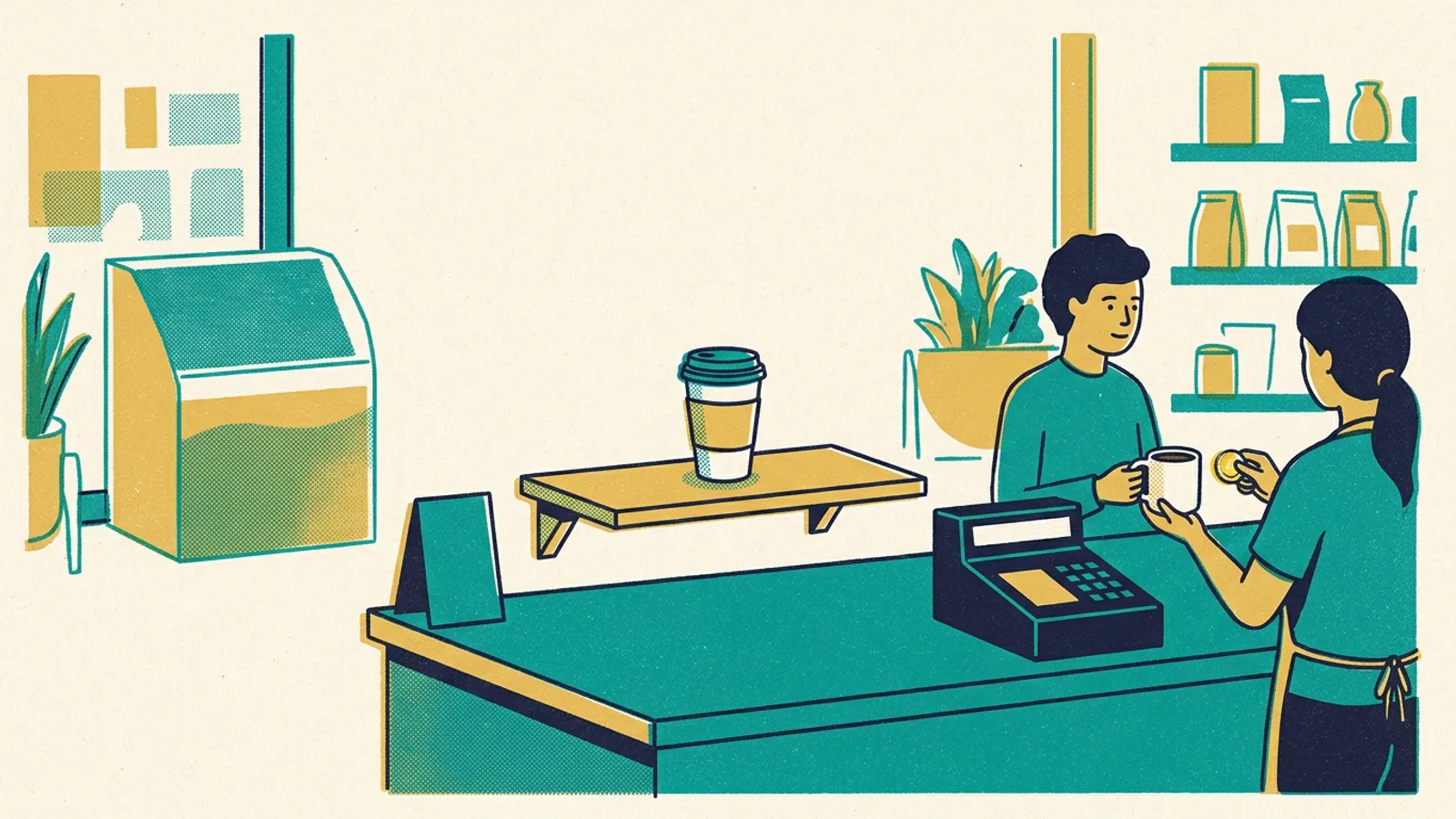
Loyalty shouldn't take years. trovy treats every guest like a regular from the first visit: a reward the moment they pay, a branded text, a reason to come back. trovy works through the POS you already run. A guest pays at your counter, and a few seconds later a text lands on their phone: "You earned $4 at [your restaurant]. Use it on your next order of $40 or more by October 30." Their phone number is now a member record on your own list, with consent handled at the join. When they come back and spend the minimum, the reward comes off the bill. Rewards expire, 30 to 60 days out, and the text says so. That date is what brings people back on a schedule.
You set four numbers, once:
| Parameter | What it does | A fast-casual counter, $30 average ticket |
|---|---|---|
| Earn rate | Share of the purchase that becomes a reward | 10% |
| Cap | The most a single visit can earn | $5 |
| Minimum spend | What the return order has to reach to redeem | $40 |
| Expiry | How long the reward lasts | 30 days |
What it costs: start for $5, everything included for your first 5 redemption visits or your first month, whichever comes first. Then you pay only on repeat sales: 2.5% of what the guest spends on the visit where they redeem, after the reward comes off, plus five cents for each text you send.
Run the $40 order again. At your counter, the guest earns $4 and you pay nothing today. They come back within 30 days for another $40 order. The $4 comes off, you collect $36, and you pay about $1 to trovy: 90 cents on the purchase and two texts at five cents. The return visit cost you $5 to win and brought in $35 after the reward and the fee. The same two orders through a 25% app would have sent $20 to the platform, and the guest would still belong to the app.
The point is not only that rewards are cheaper per order, though they are. It is that the second order is yours. The guest is on your list, you know they came back, and you can reach them with a reason to come back again. That is the thing the app will never give you, at any commission.
Related reading: POS loyalty add-ons vs instant rewards | trovy, Rising costs: 3 options for restaurants and shops | trovy, Ritual vs instant rewards: whose regulars are they? | trovy.
Sources
- Uber Eats Canada, merchant pricing
- DoorDash Canada, merchant pricing
- Uber Eats Merchant Supplemental Terms, Canada
- Restaurants Canada, Eight in 10 Canadians are cutting back on restaurant visits as affordability pressures worsen (Sept 24 2026)
- CBC News London, Some restaurant owners are urging customers to skip the delivery apps (January 2026)
- Supporting Local Restaurants Act, 2020, S.O. 2020, c. 31 (Ontario e-Laws)
- Food Delivery Service Fee Act, SBC 2022, c. 30 (BC Laws)
- Cassels LLP, British Columbia introduces permanent cap on food delivery service fees (Feb 23 2023)
- Foodservice and Hospitality, Quebec tables bill to cap delivery fees (March 16 2021)
Frequently asked questions
Uber Eats Canada publishes three delivery plans at 20%, 25% and 30% of the order. The 10% pickup fee rises to 15% unless in-app prices are validated against in-store prices. A 15% self-delivery plan is also listed (merchants.ubereats.com, opened September 30, 2026).
DoorDash Canada lists Basic at 20% on delivery and 10% on pickup, Plus at 25% and 8%, and Premier at 29% and 8%. There is no activation or subscription fee, and the tablet rents for $3 a week (merchants.doordash.com, opened September 30, 2026).
Not today. Ontario's Supporting Local Restaurants Act, 2020 capped commissions only for restaurants barred from indoor dining under pandemic orders. British Columbia has a permanent 20% cap under its Food Delivery Service Fee Act, in force since January 1, 2023.
A name and phone number for the delivery, and nothing to market with. Uber Eats' Canadian merchant terms bar using that data for targeted marketing or analytics, and access to it ends with the agreement.
Start for $5, everything included for your first 5 redemption visits or your first month, whichever comes first. Then 2.5% of the purchase on which a member redeems, after the reward comes off, plus five cents per text. There is no setup fee and no monthly fee.
Yes. Many restaurants keep an app for reach and use instant rewards to turn a first visit at the counter into a second. The reward is earned on purchases through your own POS, so the guest's return trip is yours.