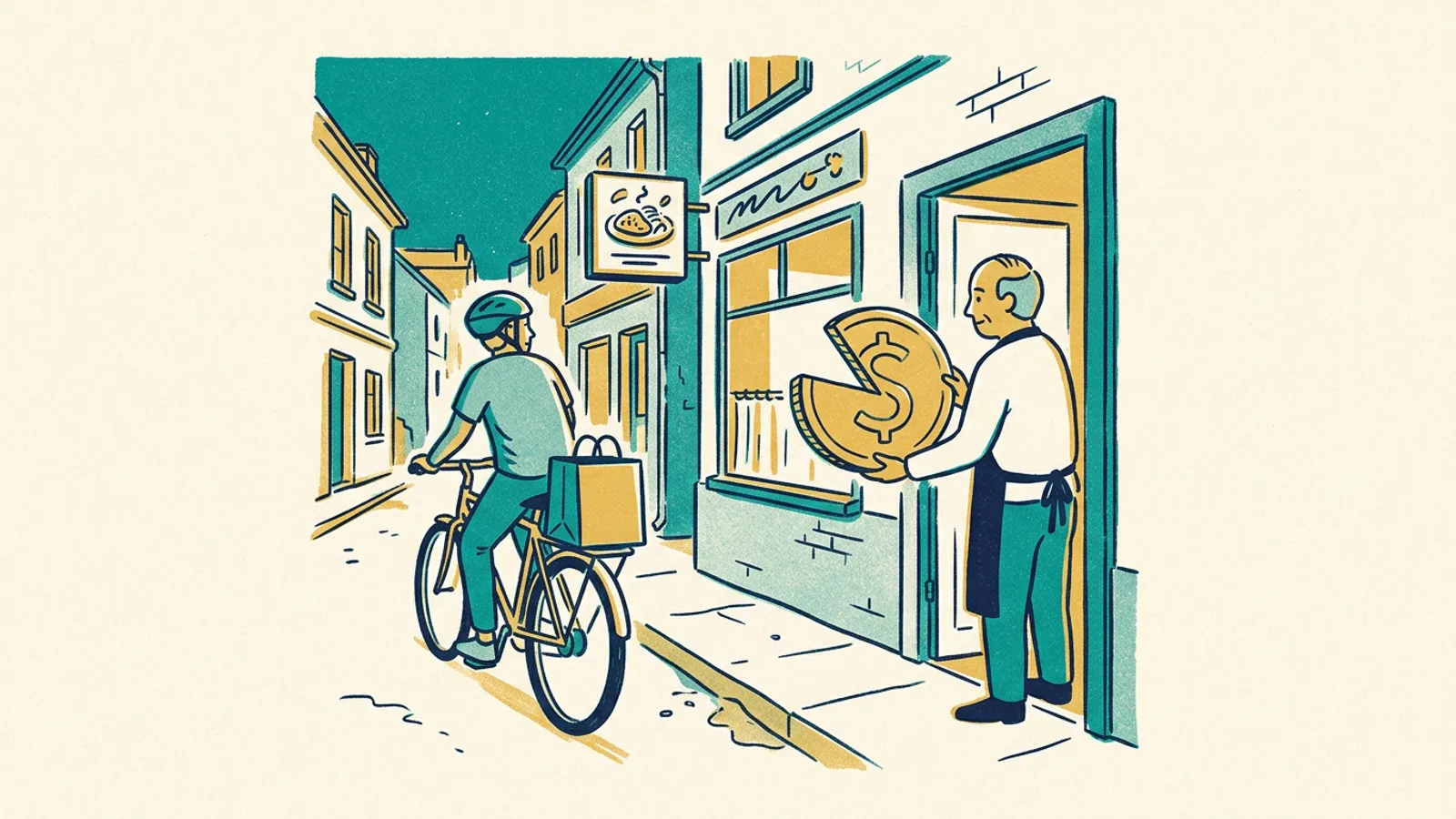
Ritual vs instant rewards: whose regulars are they? Platform loyalty vs rewards that belong to your restaurant
Ritual's points become Ritual credits; OpenTable's pay out in gift cards. The platform keeps the regular. What each costs, and the reward you keep on trovy.

- Published
- Reading time
- 9 minutes
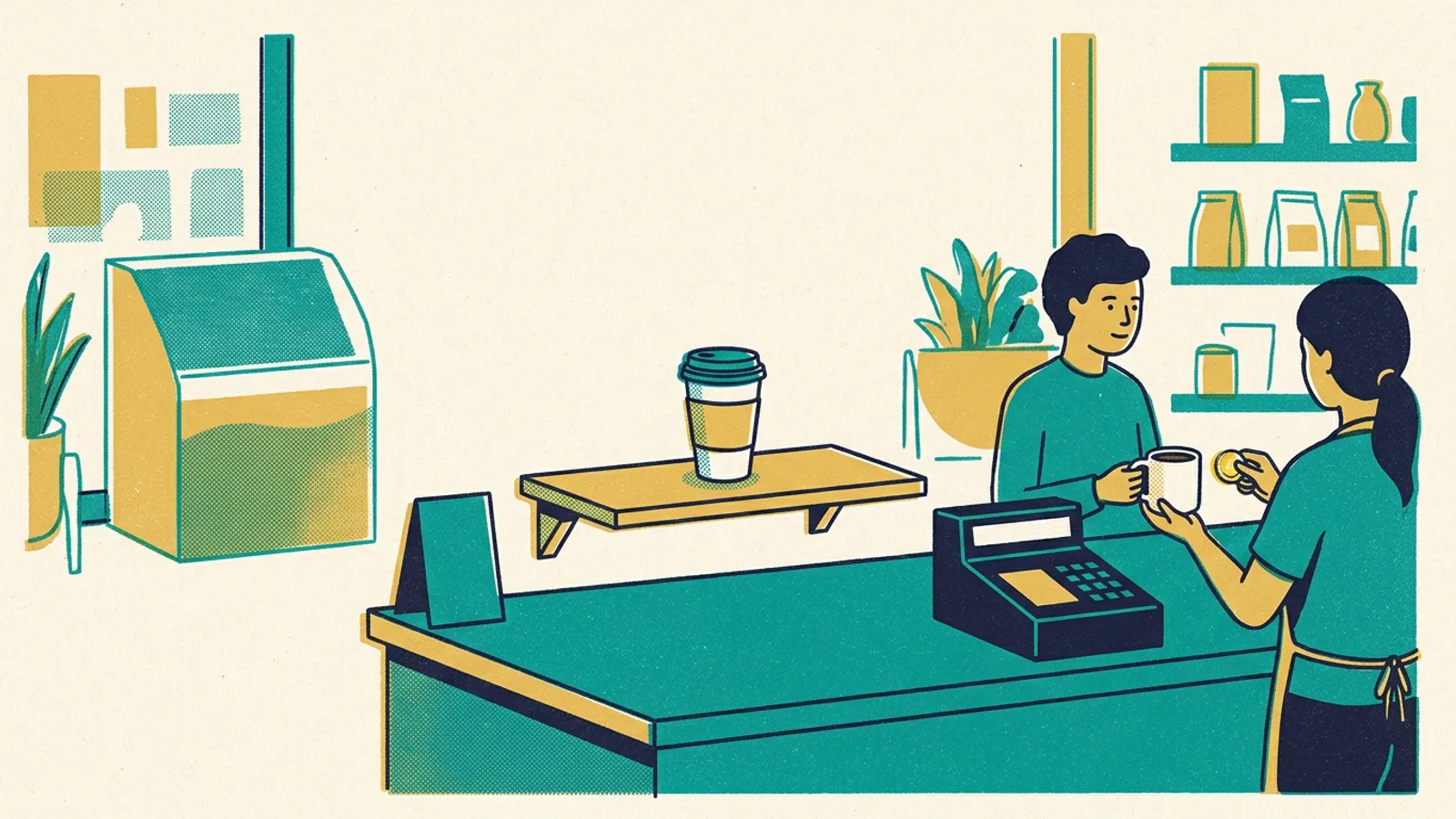
On Ritual, OpenTable or Resy, the regulars are the platform's. Ritual's points become Ritual credits, good at any restaurant on Ritual. OpenTable's Regulars pays out in Amazon gift cards in Canada. Keep the platform for reach. Make the regulars yours with an instant reward on trovy: a dollar amount by text, good only at your counter.
Whose program it is
Each platform runs a loyalty program. None of them is yours.
Ritual. Ritual's rewards page describes its program in its own words: "Cash in your points for Ritual credits to spend anywhere you want." It adds: "When you reach 10,000 points, trade 'em in for $10 in Ritual credits." The guest earns by ordering through Ritual, and the credit spends at any restaurant on Ritual. The habit being rewarded is opening the app, not walking through your door.
OpenTable. OpenTable relaunched its diner program as OpenTable Regulars on October 27, 2025. Diners "collect 100 points per booking, with select reservations offering up to 1,000 points." Gold status comes after six reservations in twelve months, and points redeem for a credit on the bill in the US or, in Canada and elsewhere, for Amazon gift cards. The name says it: the diner is OpenTable's regular.
Resy. Resy's own pages on its diner tiers would not render for this check. This article describes only what Resy's pricing page says: the platform charges restaurants a monthly fee, with "no per-cover fees." What it rewards, by design, is booking through Resy.
A platform program is not a bad thing. It is a program for the platform's customer, paid for in part by your restaurant.
What do the platforms cost?
Each publishes a different kind of number, and one publishes pages that would not open.
| Platform | What its own page says (opened October 4, 2026) | What is not disclosed |
|---|---|---|
| Ritual | "Under 10% commission for new restaurants" and "No commissions on existing customers" | No monthly fee appears on the current pricing page. An older Toronto promotional page still shows a 2020 price, which this article does not use |
| OpenTable | Plan pricing is on its site; the pages would not open for this check | No figure is quoted here for that reason |
| Resy | Prices in dollars, currency unmarked on the page: Platform $289 a month; Essential $289 plus a 3% fee on prepayments; Platform 360 $459; Premium $459 plus 2% on prepayments. "We do not charge any fees on a per reservation basis" | What each tier includes beyond the headline |
Put the Resy figure against the industry. Restaurants Canada's September 2026 release puts the average pre-tax margin at 4.1%, "the equivalent of earning a profit only on the last day of a typical 30-day month." A $289 subscription (Resy marks no currency, so take it as a floor in Canadian dollars) is $3,468 a year, which is the entire pre-tax profit on about $84,600 of sales at that margin. That is the booking book, before anyone has eaten.
Ritual's model is kinder on paper: nothing on existing customers, a commission on new ones. Take a $25 lunch from a new customer: less than $2.50 to Ritual. The guest earns Ritual points toward Ritual credit. Your restaurant paid for the introduction, and the platform kept the relationship.
Who owns the guest?
Read the terms. Ritual's privacy policy: "Your order and Profile Data may be shared with our restaurants for the purpose of fulfilling your order." It goes on: "We do not share your contact information with our restaurants without your express consent." Separately, Ritual may share analytics with restaurants, "including first name and last initial of the top customers of the month." You learn that Sarah K. is your best customer. You cannot text her.
Resy's restaurant terms put the weight the other way: "Restaurant is solely responsible for its marketing campaigns." The restaurant also "maintains ultimate responsibility for obtaining and otherwise fully complying with its customer's venue marketing opt-in and opt-out choices." Fair enough. It also means the consent you can act on is the consent you collected yourself.
OpenTable's restaurant terms would not open for this check, so they are not quoted. The direction of the market is on the record, though. In April 2026 OpenTable bought Libro, the Montreal reservation platform with more than 3,000 restaurant partners, for an undisclosed amount. Whatever the terms, a guest list that lives on a platform moves when the platform does.
The rule that follows: whoever holds the phone number, with consent, holds the regular.
The short version
| Platform loyalty (Ritual, OpenTable, Resy) | Instant rewards on trovy | |
|---|---|---|
| Whose reward it is | The platform's: Ritual credits spend at any restaurant on Ritual; OpenTable points pay out in Amazon gift cards in Canada | Yours: a dollar reward good only at your restaurant |
| What it costs | Ritual: under 10% commission on new customers; Resy: $289 or $459 a month; OpenTable: plan pricing on its site | $5 to start, covering your first 5 redemption visits or your first month, whichever comes first; then 2.5% of that visit and five cents a text |
| Who the guest belongs to | Ritual shares contact details only with the guest's express consent; Resy makes the restaurant responsible for its own opt-ins | The member joins your own list by phone number at the counter |
| What happens if you leave | The profile and the history stay on the platform | The list and the rewards stay with you |
| Channel | The platform's app | A text, the moment they pay |
| Best for | Reach: pickup and bookings from people who have not found you yet | The second visit from people who have |
When a platform still makes sense
- Reach you cannot buy otherwise. Ritual's lunch crowd in an office district, or OpenTable's bookings from visitors who search there first, are guests you would not otherwise meet.
- The booking book itself. Tables, waitlists, no-show protection and prepayments are what Resy and OpenTable sell, and a busy dining room needs one.
- Pickup from existing customers. On Ritual's current terms, orders from existing customers carry no commission, which is a fair deal for a counter already on the app.
- A new restaurant with no list yet. The platform is the fastest first week.
The limit is the same each time: the platform brings the guest, and keeps the record of them.
What instant rewards do instead
Loyalty shouldn't take years. trovy treats every guest like a regular from the first visit: a reward the moment they pay, a branded text, a reason to come back. trovy works through the POS you already run. A guest pays at the counter, and seconds later a text lands: "You earned $2.50 at [your restaurant]. Use it on your next visit of $25 or more by November 3." Their phone number becomes a member record on your own list, with consent handled at the join. The reward spends at your restaurant and nowhere else, and it expires, which is the point.
Four numbers, set once:
| Parameter | What it does | Lunch counter, $25 ticket | Dining room, $80 cheque |
|---|---|---|---|
| Earn rate | Share of the purchase that becomes a reward | 10% | 10% |
| Cap | The most one visit can earn | $3 | $10 |
| Minimum spend | What the return purchase has to reach | $25 | $60 |
| Expiry | How long the reward lasts | 30 days | 45 days |
What it costs: start for $5, everything included for your first 5 redemption visits or your first month, whichever comes first. Then you pay only on repeat sales: 2.5% of what the member spends on the visit where they redeem, after the reward comes off, plus five cents for each text you send.
Run the $25 lunch again. The new customer earns $2.50 by text. They come back the next week, spend $25, and $2.50 comes off. You collect $22.50 and pay about 66 cents (56 cents plus two texts). On Ritual, the same first order cost less than $2.50 in commission and earned the guest Ritual credit. On trovy it cost nothing until the second visit, and the second visit was yours.
Keep the platform if it earns its fee. Let the reward do the one thing the platform cannot: bring the same guest back to you, by name, with a date.
Related reading: Is Uber Eats worth it for a Canadian restaurant? | trovy, POS loyalty add-ons vs instant rewards | trovy, Email vs text for bringing customers back | trovy.
Sources
- Ritual, Pricing
- Ritual, Rewards
- Ritual, Privacy policy
- OpenTable, press release: OpenTable unveils revamped loyalty program, OpenTable Regulars (October 27, 2025)
- Resy, Plans and pricing
- ResyOS Terms of Service
- Restaurants Canada, Eight in 10 Canadians are cutting back on restaurant visits as affordability pressures worsen (September 24, 2026)
- BetaKit, OpenTable gobbles up Canadian market share with Libro acquisition (April 2026)
Frequently asked questions
On Ritual's pricing page in October 2026: "Under 10% commission for new restaurants" and "No commissions on existing customers." No monthly fee is shown on that page.
OpenTable. Its Regulars program, launched in October 2025, gives diners 100 points per booking, Gold status after six reservations in twelve months, and redemption in Amazon gift cards in Canada (bill credit is US only). The habit it rewards is booking through OpenTable.
On Resy's pricing page, in dollars with no currency marked: $289 a month for Platform or Essential, $459 for Platform 360 or Premium. Some plans add a 2% or 3% fee on prepayments; there are no per-cover fees.
Not without the customer's express consent, under Ritual's privacy policy. The restaurant receives order details to fulfil the order and monthly analytics on its top customers by first name and last initial.
Start for $5, everything included for your first 5 redemption visits or your first month, whichever comes first. Then 2.5% of the purchase on which a member redeems, after the reward comes off, plus five cents per text. There is no setup fee and no monthly fee.
Yes. The platform brings the first visit; trovy issues the reward on purchases that run through your POS and brings the second. Ask us how your pickup orders flow before you set the campaign.