Gift certificates vs gift cards with rewards built in: what a paper certificate leaves on the table for a Canadian shop
A paper certificate ends at redemption and says nothing about who used it. Canada's gift card rules, and the card that makes the recipient a member on trovy.

- Published
- Reading time
- 10 minutes

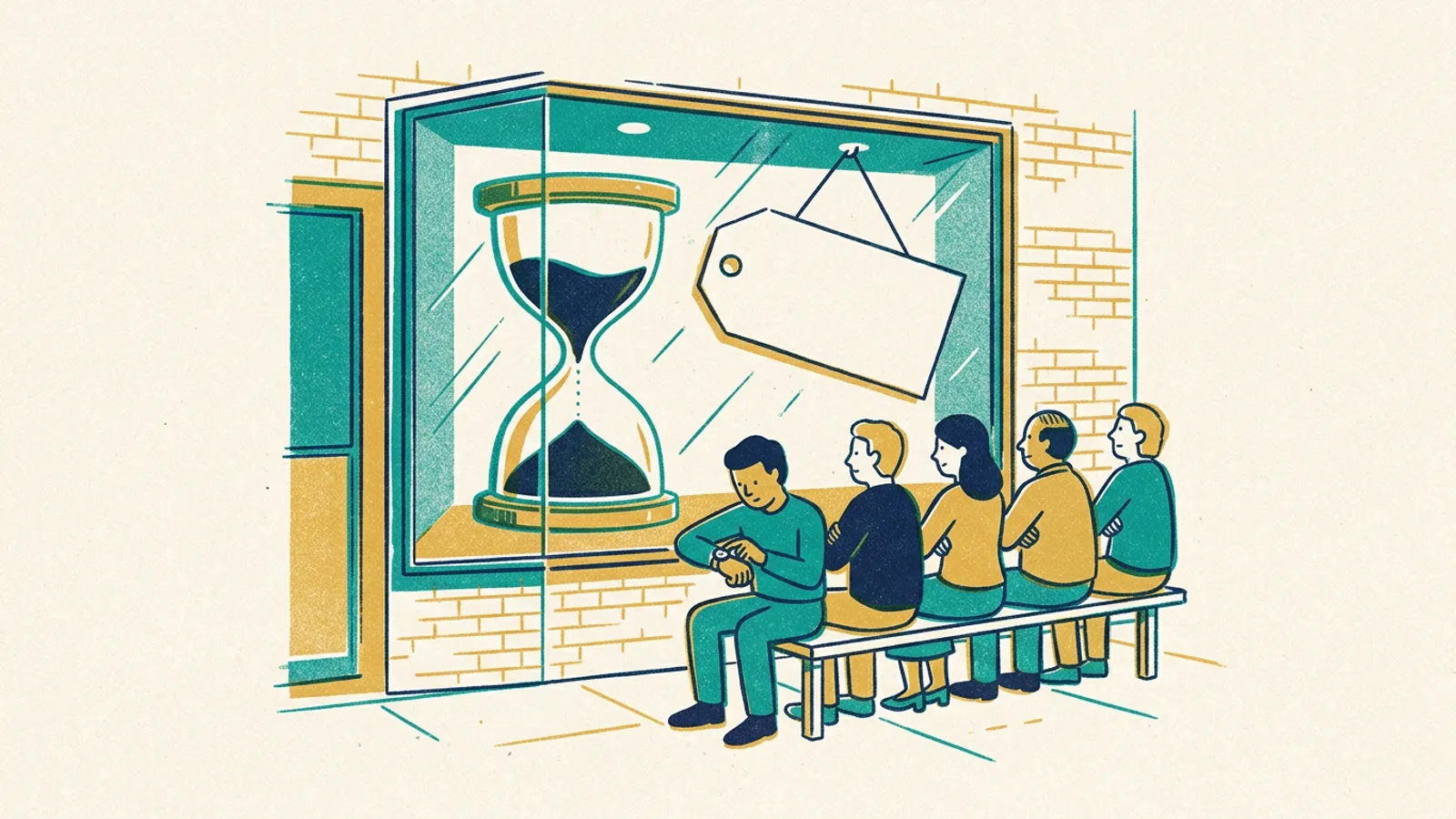
A paper gift certificate is a sale with no second act. It ends at redemption, and the shop never learns who walked in holding it. A digital gift card with rewards built in, on trovy, makes the recipient a member by phone number when they claim it. In Ontario, neither can expire. Only one keeps working.
What does a paper certificate leave on the table?
Start with what a certificate does well: it is a sale paid in full, today, for a visit that happens later. The problem is everything around that sale.
- The recipient is a stranger. A certificate carries a number and a name in a notebook. The person who redeems it is someone the buyer likes enough to send to you. You learn nothing about them: no phone number, no consent to reach them, no record of what they bought.
- The visit is bigger than the card, and it is the only visit you get. In Fiserv's Q4 2025 Gift Card Gauge, a survey of more than 1,000 US consumers, 42% said they spend more than the card's value. The top-up happens once, and then the certificate is a receipt in a drawer.
- Many are never used, and you cannot tell which. A Square-commissioned survey reported by CTV in March 2021 found almost half the gift cards sold through its Canadian merchants had never been redeemed. The figure is a vendor survey and five years old, so treat it as a direction, not a measurement. The direction is enough: a certificate that goes unredeemed is a customer you were promised and never met.
- The season is big and getting bigger. In the Retail Council of Canada and Leger holiday survey of 2,505 Canadians in August 2025, 47% planned to buy gift cards, up from 42% in 2024. The average holiday budget was $975 a person. The card is the most popular gift in the country, and a handwritten certificate is the least useful version of it.
A digital card fixes the first three and rides the fourth. The rest of this piece is what that looks like, and what the law says you can and cannot do with either.
The law: what a gift card can and cannot do in Canada
Gift cards are regulated province by province, and the rules are stricter than most owners assume. Ontario first, then the other provinces in a line each.
Ontario. Under the Consumer Protection Act, 2002 and O. Reg. 17/05, "the Consumer Protection Act bans most retail business gift cards from having an expiry date." A business also cannot charge "activation fees or added service fees to purchase the card or to use the card," nor "fees that reduce the value of the gift card over time, sometimes called dormancy fees." The only fees allowed are to "customize a gift card" or "replace a lost or stolen card." Mall cards are the exception: a small activation fee and, after 15 months, a monthly dormancy fee are permitted. Cards for a single specific service, charitable cards and "loyalty cards or club cards used to collect rewards or points" sit outside the rules. That last exemption is why a reward on trovy can expire and a gift card balance cannot, and why this article says both plainly.
British Columbia. Consumer Protection BC: a dollar-value card cannot expire; cards for "a specific good or service" (one massage), cards "sold at a discount" and charitable or promotional cards can. Fees are allowed only for "personalizing a card" or "replacing a card."
Alberta. Gift cards bought in Alberta "are no longer subject to expiry dates and fees that lower their value over time," in Law Central Alberta's summary of the provincial rules (the government's own page would not open on the day).
Quebec. The Office de la protection du consommateur: a merchant cannot indicate an expiry date or set "a period after which the card can no longer be used." A $50 card "retains its full value indefinitely if unused." A single shop's card carries no activation or usage fees (the rule covers every card other than multi-merchant ones); multi-merchant cards may charge up to $3.50 to activate, or $2.50 a month after 15 months unused.
The pattern is the same everywhere in Canada: the balance on a card you sell belongs to the customer until they spend it. Plan for it to be spent, and plan for who spends it.
The short version
| Paper certificate | Generic plastic or POS card | Gift card with rewards built in (trovy) | |
|---|---|---|---|
| How it is bought | At the counter, in opening hours | At the counter, or online if the POS sells eGift cards | Online at any hour, from a link on your site or a QR code at the counter |
| What you learn about the recipient | Nothing | A code, sometimes an email | A member record by phone number, with consent, at the claim |
| What happens after it is spent | Nothing | Nothing, unless the POS runs a points program on top | The recipient keeps earning instant rewards by text on later visits |
| What it costs you | Printing and the notebook | Card stock and, on Square in Canada, a 2.5% load fee plus processing | No fees to trovy; standard card processing on the purchase |
| Expiry | The balance cannot expire in Ontario | The balance cannot expire in Ontario | The balance cannot expire; the rewards earned later do, and the text says so |
| Best for | A shop with no card reader and a dozen certificates a year | A chain that already runs its POS vendor's card program | Any shop that wants the person who received the gift to come back on their own |
When does paper still make sense?
- When you sell a handful a year. A dozen certificates at Christmas, written on the spot, cost nothing to run and need no system. The value lost is small because the volume is.
- When the certificate is for one service. A single massage or a single class is exempt from the no-expiry rule in Ontario and BC, and a dated voucher is the right tool for a booking.
- When the till is a cash drawer. No card reader, no online sale; paper is what fits.
- When the gift is the handwriting. Some shops' certificates are part of the brand. Keep them, and ask for a phone number at redemption so the recipient can still join your list.
The limit is the same in every case: the recipient is the customer you were introduced to, and paper never makes the introduction.
What a gift card with rewards built in does
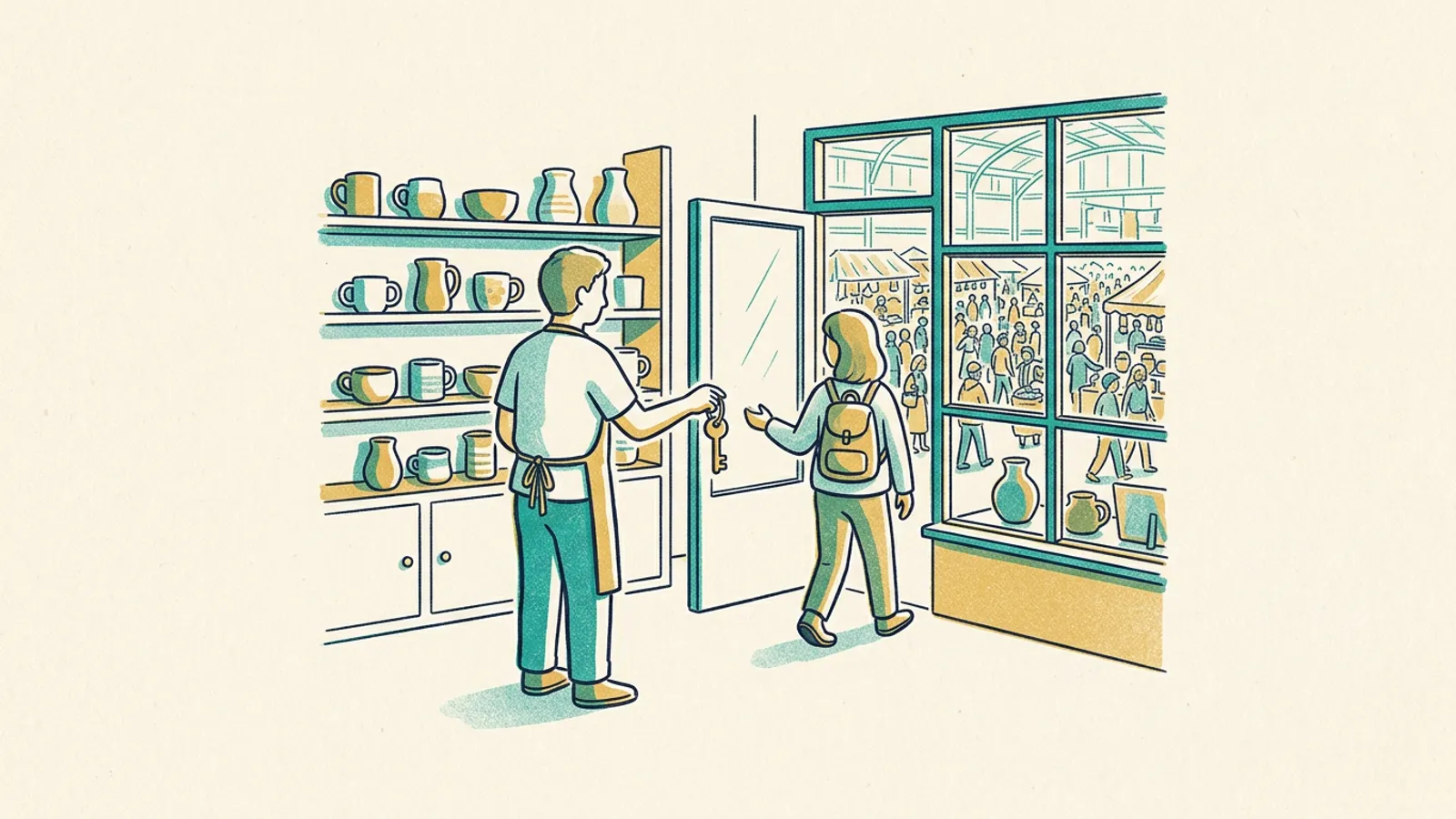
Loyalty shouldn't take years. On trovy the person who claims a gift card is treated like a regular from the first visit: a reward the moment they pay, a branded text, a reason to come back. A trovy gift card is bought online, from a link on your site or a QR code at the counter, at any hour. The buyer pays, and the recipient gets the card by text. They claim it with their phone number, and that number becomes a member record on your own list, with consent handled at the claim. At the till, you look the card up by phone number and apply the balance; nothing to print, nothing to lose. The balance never expires.
What makes it different is the second act. Once the recipient is a member, their later purchases earn an instant reward by text, with a date on it, like any other member on trovy. The gift brought them in; the reward brings them back.
What it costs: no fees to trovy for the gift card. You pay the standard card processing on the purchase, as you would on any sale. Rewards, when they are earned later, run on trovy's usual terms. You pay 2.5% of what the member spends on the visit where they redeem, after the reward comes off, plus five cents for each text. If nobody comes back, you pay nothing.
A $75 card at a gift shop. A friend buys it online on a Sunday night. The recipient claims it by phone number and comes in the following week. On the Fiserv pattern, call the basket $95: the $75 on the card and $20 of their own. The shop has had its $75 since the night the card was bought, collects the $20, and now has a member on its list. The shop runs 10% capped at $10, a $50 minimum and a 45-day expiry. The next time that member spends $60, a $6 reward lands by text within seconds, usable on a purchase of $50 or more in the next 45 days. When they use it on a $60 basket, the shop collects $54 and pays about $1.45 in fees (2.5% of $54, plus two texts). On paper, the same gift is a $75 certificate, one visit, and a stranger. A certificate ends at redemption. A card with rewards built in makes the recipient a regular from their first visit, before the shop has even learned their name.
Related reading: Square Loyalty vs instant rewards for Canadian shops | trovy, Markdowns vs instant rewards for clothing retailers | trovy, Smile.io vs instant rewards at the counter | trovy.
Sources
- Government of Ontario, Buying or using gift cards
- O. Reg. 17/05 under the Consumer Protection Act, 2002 (e-Laws; JS-rendered, substance from the government summary)
- Consumer Protection BC, Wait, I thought gift cards can't expire?
- Consumer Protection BC, Buying a gift card to support a small business: the rules
- Law Central Alberta, Gift cards in Alberta
- Office de la protection du consommateur (Quebec), Prepaid cards: expiration
- Office de la protection du consommateur (Quebec), Prepaid cards: fees
- Fiserv, Gift cards emerge as powerful budgeting tools in 2025 (Q4 2025 Gift Card Gauge)
- Retail Council of Canada and Leger, 2025 Holiday Shopping Survey release (via Newswire)
- Square Canada, Gift card pricing
- CTV News, Canadians sitting on gift cards with unused balances, survey finds (March 30, 2021)
- Shopify, Gift cards for retail
Frequently asked questions
No. Ontario's Consumer Protection Act bans expiry dates on most retail gift cards and bans activation, service and dormancy fees. Only a fee to customize a card or replace a lost one is allowed. Cards for a single specific service, charitable cards and loyalty or points cards are exempt.
In Ontario, British Columbia and Quebec, a single-merchant card cannot carry an activation or usage fee; only personalizing or replacing a card may be charged for. Mall and multi-merchant cards have their own, limited allowances.
On Square's Canadian pricing page in October 2026, eGift cards are free to set up, with a 2.5% load fee and standard processing and no monthly fee listed. Physical cards run from 66 cents to $1.75 each plus the same fees.
No fees to trovy for the gift card. The shop pays its standard card processing on the purchase. Rewards the recipient earns later run on trovy's usual terms: $5 to start, covering your first 5 redemption visits or your first month, whichever comes first, then 2.5% of each redemption plus 5¢ a text.
Often. In Fiserv's Q4 2025 Gift Card Gauge, a US survey of more than 1,000 consumers, 42% said they spend more than the card's value. The point of a card with rewards built in is that the visit after that one is yours too.
Treat it as if it does. Ontario's rules are written around the gift card agreement, not the plastic, and the government's consumer page draws no line between a card and a certificate for a dollar amount. The prudent reading for a shop is the same rules for both: no expiry date and no fees.